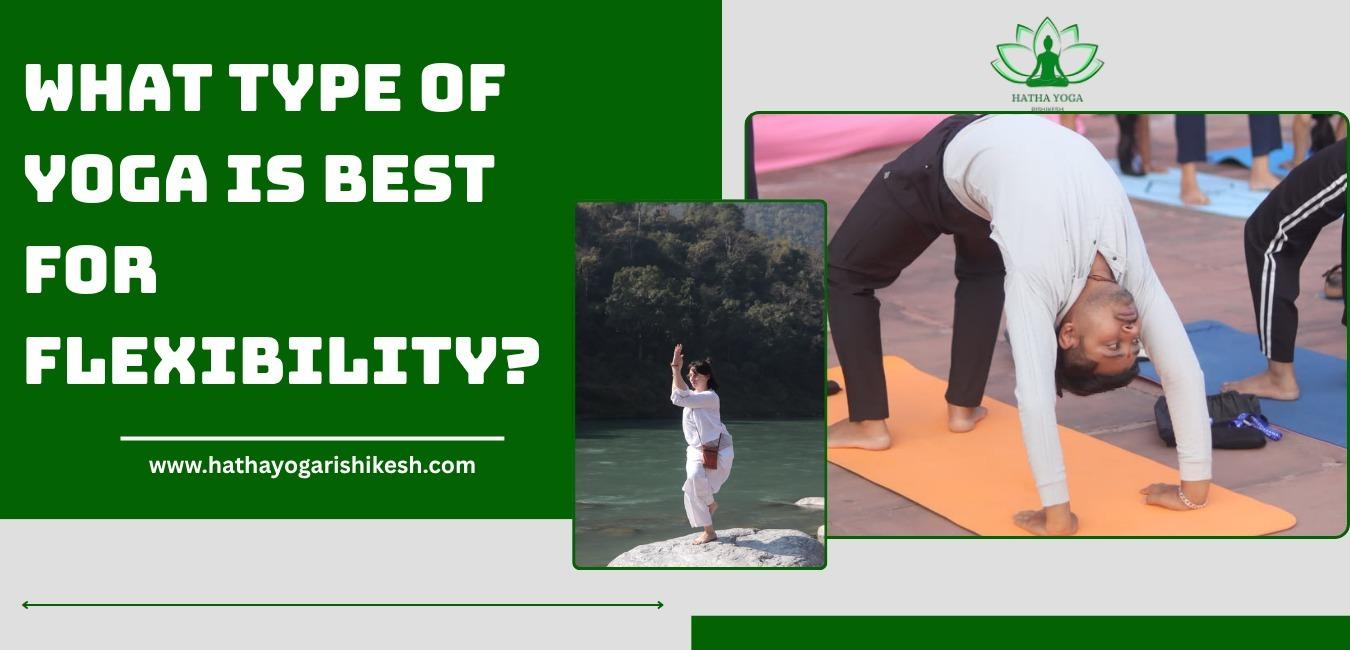
You are not the only one searching about the best yoga to use to increase flexibility. Credibility is among the most widespread motivations, which makes people begin practicing yoga regardless of whether they want to become less stiff, more postural, or be able to move their body without difficulties. The brighter side is that yoga has several forms that could be used in order to enhance flexibility in a natural, safe and effective manner.
Table of Contents
- Learning to be flexible with Yoga.
- The reason Yoga is the best for flexibility.
- Types of Yoga that are best in Flexibility.
- 1. Hatha Yoga - Lightest and mostly Easygoing Flexibility.
- Why Hatha Yoga Is Good in Flexibility.
- Who is the Practitioner of Hatha Yoga?
- 2. Yin Yoga - Perfect in the event of profound flexibility and stretching of tissue.
- Why Yin Yoga Is Powerful
- Who Should Practice Yin Yoga?
- 3. Vinyasa Yoga - Best Dynamic Flexibility.
- Vinyasa Advantages of Flexibility.
- To whom should Vinyasa Yoga be Practiced?
- 4. Iyengar Yoga - Ideal when it comes to Flexibility due to alignment.
- Why Iyengar Yoga Flexibility.
- 5. Restorative Yoga - Ideal in case of mild flexibility and relaxation.
- Benefits for Flexibility
- What is the best Yoga Style in regard to Flexibility?
- For Beginners:
- For Deep Stretching:
- For Active Flexibility:
- For Precision and Safety:
- The Choice of the right Yoga to be Flexible.
- Your Fitness Level
- Your Goal
- Your Body Type
- Best Yoga Poses for Flexibility
- What is the Time Period to Raise Flexibility using Yoga?
- Complete Guide to Flexibility Faster with Yoga.
- Practice Regularly
- Hold Poses Longer
- Focus on Breathing
- Avoid Overstretching
- Combine Styles
- Common Mistakes to Avoid
- Final Thoughts
- FAQs – Best Yoga for Flexibility
- 1. What kind of yoga should I do for flexibility?
- 2. How frequently can I be flexible with yoga?
- 3. Is it difficult to be flexible when using yoga?
- 4. Is yoga superior to stretching to bring flexibility?
- 5. Will yoga teach beginners to be flexible?
- 6. What yoga postures increase the most rapidity?
- 7. Is Yin yoga good in terms of flexibility?
- 8. Is yoga able to help the age-related flexibilities?
- 9. Would I experience pain in the process of doing an exercise of flexibility using yoga?
- 10. Should I be flexible to begin yoga?
- Start Your Yoga Journey
Nevertheless, not every style of yoga is similar. Others are deep stretching, and other ones are the combination of strength, movement, and breath. Here, in an elaborate guide, we shall discuss which form of yoga is the most effective in flexibility, how each one functions, and how you can decide on the kind of yoga that is most appropriate to your body and objectives.
Learning to be flexible with Yoga.
Flexibility in yoga is not a complicated concept; therefore, it is worthwhile to find out what it is all about before indulging into various styles.
Flexibility does not consist only in touching toes or making splits. It includes:
- Muscle elasticity
- Joint mobility
- Range of motion
- Connective tissues relaxation.
Yoga enhances flexibility because of the combination of stretching, breathing, and mindfulness that release tension accumulated in the body. The tight muscles such as hamstrings, hips, shoulders, and spine are gradually opened by practice.
Research indicates that yoga as a regular exercise can really enhance the mobility of the joints in the long run and decrease the stiffness.
The reason Yoga is the best for flexibility.
Yoga is superior to normal stretching since it is an activity that targets the body and mind. Yoga: In comparison to stretching exercises in a gym.
- Moves slowly and in a controlled manner.
- Promotes more profound posing.
- Is concentrated on the breath to relieve stress.
- Attacks both the connective tissues and the muscles.
Hatha and Yin yoga are styles that focus on longer holds and have been found to be particularly helpful to flexibility.
Types of Yoga that are best in Flexibility.
It is time to discuss the best yoga styles to be more flexible.
1. Hatha Yoga - Lightest and mostly Easygoing Flexibility.
Hatha Yoga is the right place to get started with in case you are a novice and want to become more flexible.
Hatha yoga is not fast and is concentrated on simplistic postures (asanas). The poses are maintained by several breaths, as the body is getting used to it and also it is a safe way to get into a pose.
Why Hatha Yoga Is Good in Flexibility.
- Half speed movements reduce the risk of injury.
- Pose holding helps in better muscle stretching.
- Concentration enhances the position.
- Helps massage spasmodic muscles.
Hatha yoga is particularly useful to individuals with stiff bodies or those who sit a lot. It provides a good base upon which the body is not overworked.
Who is the Practitioner of Hatha Yoga?
- Beginners
- People with low flexibility
- The ones who are re-forming after stiffness or inactivity.
Programs such as this can be tried out in case you are starting off.
100 Hour Yoga Instructor Training In Rishikesh or
200 hour yoga training in Rishikesh to have a firm foundation.
2. Yin Yoga - Perfect in the event of profound flexibility and stretching of tissue.
Yin Yoga is one of the best styles as far as deep flexibility is concerned.
Yin yoga is the practice of the poses at a greater length (3-5 minutes or more). This will enable the stretch to extend deeper into the body, ligaments, joints and fascia.
Why Yin Yoga Is Powerful
- Targets not only the muscles but also the connective tissues.
- Improves joint mobility
- Brings in long-term flexibility.
- Encourages deep relaxation
Yin yoga is opposed to active forms of yoga. It does not utilize any muscles as it lets the muscles relax allowing the stretch to be deeper.
Who Should Practice Yin Yoga?
- Individuals that have tight hips and lower backs.
- Deep stretching, those desiring.
- Highly flexible goals of advanced practitioners.
To ensure continuity in your practice, you can interfere in classes with drop in yoga classes.
3. Vinyasa Yoga - Best Dynamic Flexibility.
In case you like motion and flow, the Vinyasa Yoga is excellent in enhancing flexibility.
Vinyasa unites movement with breath and forms a flowing between the poses. This aids in warming up muscles making them more flexible.
Vinyasa Advantages of Flexibility.
- Enhances motion, actually makes people move.
- Tension of the warm muscles to stretch safely.
- Strengthens and develops with flexibility.
- Improves coordination and balance.
Vinyasa unlike the static will ensure that the body is active, this will ensure that stiffness is avoided and the overall flexibility is enhanced.
To whom should Vinyasa Yoga be Practiced?
- Intermediate practitioners
- Individuals who are fond of quick exercises.
- Individuals who desire to be flexible and have fitness.
You may even go into more practice with
300 Hour Yoga Teacher Training In Rishikesh
Yoga Teacher Training- 500 Hours in Rishikesh.
4. Iyengar Yoga - Ideal when it comes to Flexibility due to alignment.
Iyengar yoga is concerned with accuracy and orientation. It takes into consideration the aids such as blocks, straps, and bolsters to assist you in attaining proper posture.
Why Iyengar Yoga Flexibility.
- Supports safe stretching
- Enhances posture and position.
- Enables greater extension using support.
- Reduces risk of injury
It is the best style for beginners and those injured since it supports during stretching.
5. Restorative Yoga - Ideal in case of mild flexibility and relaxation.
Restorative yoga is a slow and calming activity involving the use of aids to assist the body to perform passive postures.
Benefits for Flexibility
- Releases tension in muscles
- Enhances flexibility with ease.
- Relaxation helps recovery.
- Alleviates tension and rigidity.
It is not very intense like the Yin yoga but nonetheless it enhances flexibility with time.
What is the best Yoga Style in regard to Flexibility?
The solution will lie in what you are and where you want to be.
For Beginners:
Hatha Yoga
Restorative Yoga
For Deep Stretching:
Yin Yoga
For Active Flexibility:
Vinyasa Yoga
For Precision and Safety:
Iyengar Yoga
Some researchers tend to recommend the integration of various styles to achieve optimal results since each of the types aims at flexibility differently.
The Choice of the right Yoga to be Flexible.
Making the appropriate yoga style is based on:
Your Fitness Level
Hatha or Restorative yoga should be recommended to beginners, whereas more sophisticated practitioners can experiment with Yin or Vinyasa.
Your Goal
- Want deep stretch - Yin Yoga
- Desire flow + dynamism - Vinyasa.
- Want slow improvement - Hatha
Your Body Type
Rigid bodies enjoy being slow-moving, whereas the flexible can enjoy advanced practices.
Best Yoga Poses for Flexibility
In spite of style, there are poses that are really helpful to enhance the flexibility:
- Downward Facing Dog
- Forward Fold
- Cobra Pose
- Butterfly Pose
- Pigeon Pose
Such poses loosen the large muscle groups and enhance flexibility.
What is the Time Period to Raise Flexibility using Yoga?
Consistency is a key to the enhancement of flexibility. With regular practice:
- 2-3 weeks: reduced stiffness
- 4-6 weeks: improved mobility
- 8-12 weeks: apparent flexibility.
It is more important to be constant than intensive.
You may also participate in such programs as:
- Rishikesh 3 Days Yoga Retreat.
- Rishikesh 5 Days Yoga Retreat.
- Rishikesh 7 Days Yoga Retreat.
- Rishikesh 10 Days yoga Retreat.
Such immersive experiences are useful in speeding up the flexibility outcomes.
Complete Guide to Flexibility Faster with Yoga.
The following tips are important in order to achieve the best results:
Practice Regularly
Consistency is key. At least three and five times a week.
Hold Poses Longer
Prolonged stretching is a boost to muscle elasticity and joint mobility.
Focus on Breathing
Deep breathing enables the muscles to relax and stretch more.
Avoid Overstretching
Flexibility also builds up well over time and thus there should be no pushing.
Combine Styles
Combine Hatha, Yin, and Vinyasa to achieve a balance.
Common Mistakes to Avoid
These are some of the mistakes that many beginners have problems with flexibility:
- Skipping warm-up
- Forcing stretches
- Inconsistent practice
- Ignoring breathing
- Comparing with others
Note that flexibility is a slow process.
Final Thoughts
The aim of finding the best yoga in flexibility is not to find the one style that fits the body but rather finding out the proper way to do it and being consistent about it. Whereas Hatha Yoga is a good teacher, Yin Yoga assists in getting deep in flexibility and Vinyasa Yoga supports flexibility with movements. By enforcing them in combination, they make up a healthy and successful routine.
Flexibility does not come within a day. It should take time, practice and conscious breathing. It is better to do it step by step and find a balance rather than strain your body to the extreme positions. With time, you will find more than just physical flexibility, you will be able to walk taller, you will have lower stress and a better overall health.
To get quicker and more directed outcomes, enrolling in an organized course, such as 200 Hour Yoga Teacher Training In Rishikesh, or brief retreats, such as 7 Days Yoga Retreat In Rishikesh, may be beneficial to expand the practice and further the improvement.
Finally, yoga is not a place of destination, but a process. Be consistent, listen to yourself and have fun with it- since it is balance and awareness, as well as commitment, that will bring real flexibility.
FAQs – Best Yoga for Flexibility
1. What kind of yoga should I do for flexibility?
Flexibility is most efficiently worked on with Hatha Yoga (beginners), deep stretches are to be found in Yin Yoga and dynamic movement in Vinyasa Yoga. These practices combined help us to increase flexibility slowly and steadily while gaining more strength and balance in the body.
2. How frequently can I be flexible with yoga?
If you want to increase your flexibility, work at yoga 3-5 times per week. Regular sessions have a cumulative effect that gradually loosens tight muscles, enhances joint mobility and creates a more flexible body overall – so consistency really matters more than intensity.
3. Is it difficult to be flexible when using yoga?
The side effects are minimal and can be seen after 2-3 weeks of practice. A lot of flexibility is normally required for 6-12 weeks based on consistency, body structure, and type of yoga you practice on a regular basis.
4. Is yoga superior to stretching to bring flexibility?
Yes, yoga is more effective than simple stretching since it involves breath control, awareness and movement control. The method is beneficial to loosen the muscles and provide deeper and safer stretching than traditional exercise-based stretching techniques.
5. Will yoga teach beginners to be flexible?
Definitely, yoga has a lot of flexibility to offer to beginners. The introduction of less challenging forms such as Hatha or Restorative Yoga enables the body to ease into it so that it will not be prone to injury and will have a robust foundation on which to increase its flexibility with time.
6. What yoga postures increase the most rapidity?
Such poses as Downward Dog, Forward Fold, Pigeon Pose, Butterfly Pose, and Cobra Pose are very effective. These exercises work on the larger muscles (hamstring, hips, spine, etc.) which contribute to being flexible with practice.
7. Is Yin yoga good in terms of flexibility?
Yes, one of the best styles is the Yin Yoga which is flexible. It consists of longer poses which enable greater stretching of connective tissues, joints and ligaments which eventually results in long-term flexibility and mobility.
8. Is yoga able to help the age-related flexibilities?
Yoga can, yes, enhance flexibility of any age. As with proper guidance and practice, even the older adults may gain mobility, decrease the level of stiffness, and overall body flexibility safely and effectively in the long-term.
9. Would I experience pain in the process of doing an exercise of flexibility using yoga?
No, you will not experience some sharp or intense pain during a yoga practice. Slight pain is normal but pain is an indication of excessive stretching. You should always pay attention to your body, train slowly, and concentrate on slow progress in order to prevent injuries.
10. Should I be flexible to begin yoga?
You do not have to be flexible to begin yoga. Yoga will enhance flexibility in the long-run. The easy poses can be taken up by beginners and as the body gets used to it, they can gradually advance up.
Start Your Yoga Journey
If you feel inspired to explore Ashtanga Yoga more deeply, you can join:
- 100 Hour Yoga Teacher Training in Rishikesh
- 200 Hour Yoga Teacher Training in Rishikesh
- 300 Hour Yoga Teacher Training in Rishikesh
- 500 Hour Yoga Teacher Training in Rishikesh
- 200 Hour Yoga Teacher Training Course With Sound Healing
- 200 Hours Ayurveda Yoga Teacher Training in Rishikesh, India
- 100 Hours Ayurveda Yoga Teacher Training in Rishikesh, India
- 3/5/7/10 Days Yoga Retreat in Rishikesh, India
- 7 Days Yoga Nidra Retreat in Rishikesh
- 7 Days Ayurveda Yoga Retreat in Rishikesh, India
- Drop-in Yoga Classes in Rishikesh
At Om Shanti Om Yoga Ashram in Rishikesh, you will experience yoga in its most authentic and traditional form.